Wheelchair Ramp for One Step — Front Door & Entry
A single step at the front door is one of the most common access barriers in European and UK homes. It may seem minor — but for a wheelchair user, someone with a mobility scooter or a caregiver pushing a manual chair, it is precisely the threshold that blocks independent access every single day. The right ramp solves this without drilling, without construction and without weeks of waiting. But choosing the right length matters — a ramp that is too short creates a slope that is difficult or impossible to manage safely. Measure first, then choose.
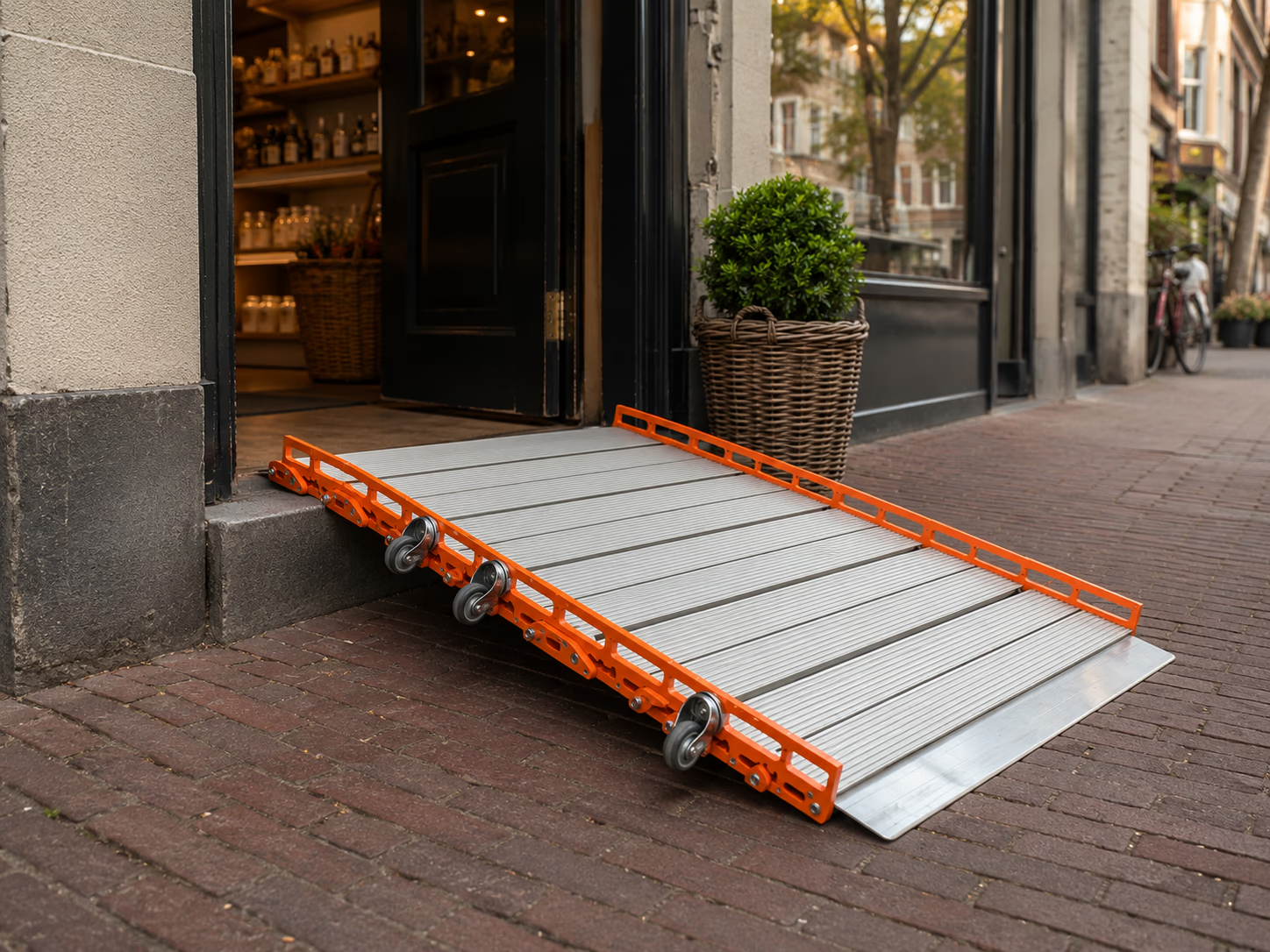
MIOR ROLL on a single step. MIOR indication: 1.2 m (approx. 4 ft). Always measure your specific situation.
The situation
You have one step at your front door, side entrance or covered porch — typically 16–18 cm (approx. 6–7 in) high. You need a portable ramp that can be placed and removed as needed, without permanent installation. This may be a temporary situation — after a hospital stay or a period of rehabilitation — or a permanent need that calls for a flexible daily solution. Either way: a portable roll-up ramp is the fastest and most practical starting point. No contractor. No planning permission. Ready in minutes.
Why measuring matters
A ramp that is too short creates a slope that is difficult or even unsafe to manage. The internationally cited 1:12 ratio — 12 cm of ramp per 1 cm of rise — gives a gentle, comfortable slope and is widely used as an accessibility design reference. At a typical single step height of 17 cm, that gives a 1:12 reference length of just over 2 metres — longer than many people expect. The MIOR practical indication for one step is 1.2 m for assisted manual wheelchair use in everyday home situations. Whether this is right for you depends on your specific user, mobility aid and available floor space. Use the MIOR calculator to find the right length for your exact situation.
Practical MIOR Indication
Typical step height
16–18 cm (approx. 6–7 in)
Practical MIOR indication
1.2 m (approx. 4 ft)
Use case
manual wheelchair with assistance — single step entry
1:12 comparison (ADA reference)
1.92–2.16 m
These examples are intended as practical MIOR indications. The correct ramp length depends on the exact height, available space, user, mobility aid and intended use. For more comfortable or guideline-aligned use, a longer ramp may be needed.
How to measure correctly
Step 1: Measure the height of the step — from the floor at the bottom to the top surface of the step. For a typical front door step, this is 16–18 cm (approx. 6–7 in). Step 2: Measure the available floor space in front of the step. Do you have at least 100–120 cm available? Then a 1.2 m MIOR ROLL fits comfortably. Step 3: Enter your step height in the MIOR calculator for a direct length recommendation — or use WEXAR to measure digitally via your smartphone, for free and without an appointment.
Measure with WEXAR
Use WEXAR to measure your step height and available space with your smartphone — free, no account required, no appointment needed. WEXAR gives you a digital indication of which ramp length fits your specific front door situation, so you can order with confidence instead of guessing. The WEXAR measurement is also a useful preparation for a funding application with your local municipality. WEXAR helps you capture height, available space and slope on your smartphone. The result is intended as a digital indication and preparation tool. For formal ADA assessments, insurance reimbursement decisions or permanent structural modifications, review by a qualified professional or occupational therapist is recommended.
📱 Learn more about WEXAR →MIOR ROLL — the solution
The MIOR ROLL is a roll-up aluminium ramp — lightweight, portable and available in multiple lengths. The 6082-T6 aluminium profile is strong enough to support 400 kg while being light enough to carry and manage by one person. Anti-slip slats on the surface provide grip in wet and dry conditions — suitable for outdoor front door use year-round. No tools. No installation. Lay it down and use it. Roll it up and store it after use. MIOR delivers within 1–2 weeks and includes a detailed quote on request — useful if you are applying for local accessibility support.
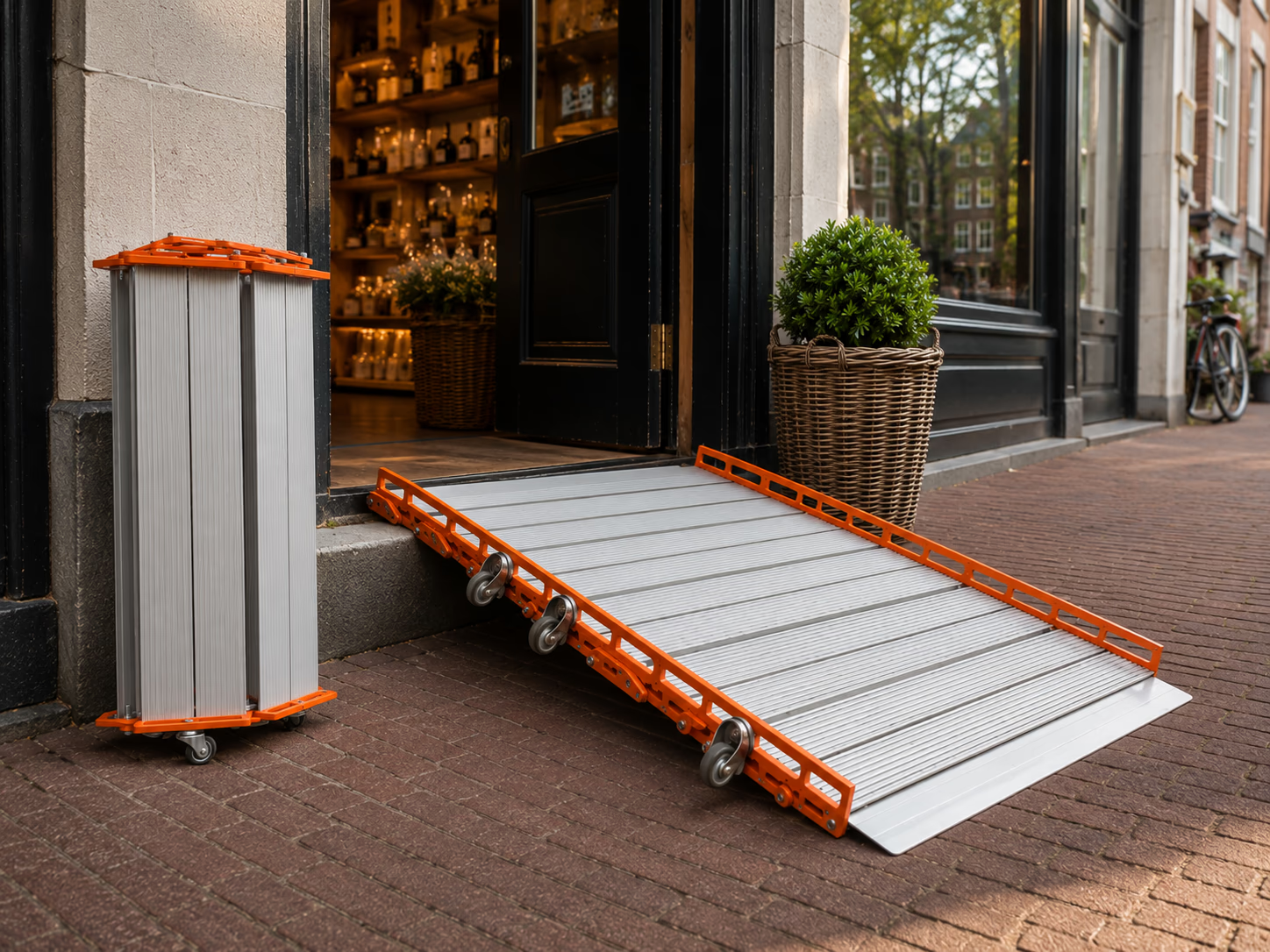
Rolls up for compact storage. No installation required.
Frequently asked questions
What length ramp do I need for one step?
For a typical single step of 16–18 cm (6–7 in), the MIOR practical indication is 1.2 m for assisted manual wheelchair use. The 1:12 reference guideline gives approximately 2 m. The right length for your situation depends on your step height, available floor space and mobility aid. Use the MIOR calculator or WEXAR for a tailored recommendation.
Is the MIOR ROLL suitable for a powered wheelchair or mobility scooter on one step?
All MIOR ROLL ramps support 400 kg — sufficient for powered wheelchairs and heavy scooters. Whether the slope is comfortable for your specific device depends on the ramp length relative to step height. Use the calculator to check the slope for your exact situation.
Do I need to drill or permanently install the ramp?
No. The MIOR ROLL is portable — lay it flat against the step and roll it up after use. No drilling, no adhesive, no tools required. Suitable for rented homes, listed buildings and shared entrances.
Can a caregiver push a wheelchair up a 1.2 m ramp on one step?
A 1.2 m ramp on a 17 cm step creates a slope of roughly 1:7 — steeper than the 1:12 reference, but manageable for assisted use in most day-to-day situations. For self-propelling users or heavier powered devices, a longer ramp is advisable. Use the calculator to assess your situation.
Can I get a ramp covered by a local accessibility support scheme?
In many European countries, municipalities offer support for accessibility adaptations under social care legislation. MIOR can supply a detailed quote with technical specifications to support your application. Whether you qualify depends on your local municipality — MIOR does not advise on individual funding decisions.
How long does delivery take?
MIOR ROLL ramps are delivered within approximately 1–2 weeks after ordering. For urgent requirements, contact us directly via the enquiry form.